Enterprise Insurance, a leading insurance provider in Ghana, faced significant challenges in efficiently managing travel insurance policies and claims for the informal sector, which constitutes a substantial part of the local economy.
The existing manual processes and lack of a centralized system made it difficult to track and manage interactions with policyholders, especially those who purchased policies via WhatsApp.
Challenges
Inefficient Policy and Claims Management: The existing system for tracking policies and processing claims was fragmented and inefficient. This led to delays, errors, and a poor user experience for policyholders.
Limited Visibility and Tracking: Enterprise Insurance lacked a centralized platform to track the journey of policyholders who interacted via WhatsApp. This made it difficult to monitor policy details, claims, and user interactions in real-time.
Operational Inefficiencies: Manual processes for managing policyholder data, claims, and communications were time-consuming and error-prone. This reduced the efficiency of operations and increased the workload for staff.
User Communication Management: There was no streamlined method to manage and track conversations with policyholders, which hindered effective customer support and follow-up.
Fraud Prevention: Without a centralized platform, it was challenging to flag vehicles involved in accidents to prevent fraudulent claims, leading to potential financial losses.
SOLUTION
To address the inefficiencies faced by Enterprise Insurance in managing travel insurance policies and claims for the informal sector in Ghana, I designed a comprehensive admin platform. This platform centralizes policy and claims management, enhances operational efficiency, improves communication tracking, and supports fraud prevention. Key features includes:
1.
Dashboard: An overview of policies, claims, payments, and user management.
2
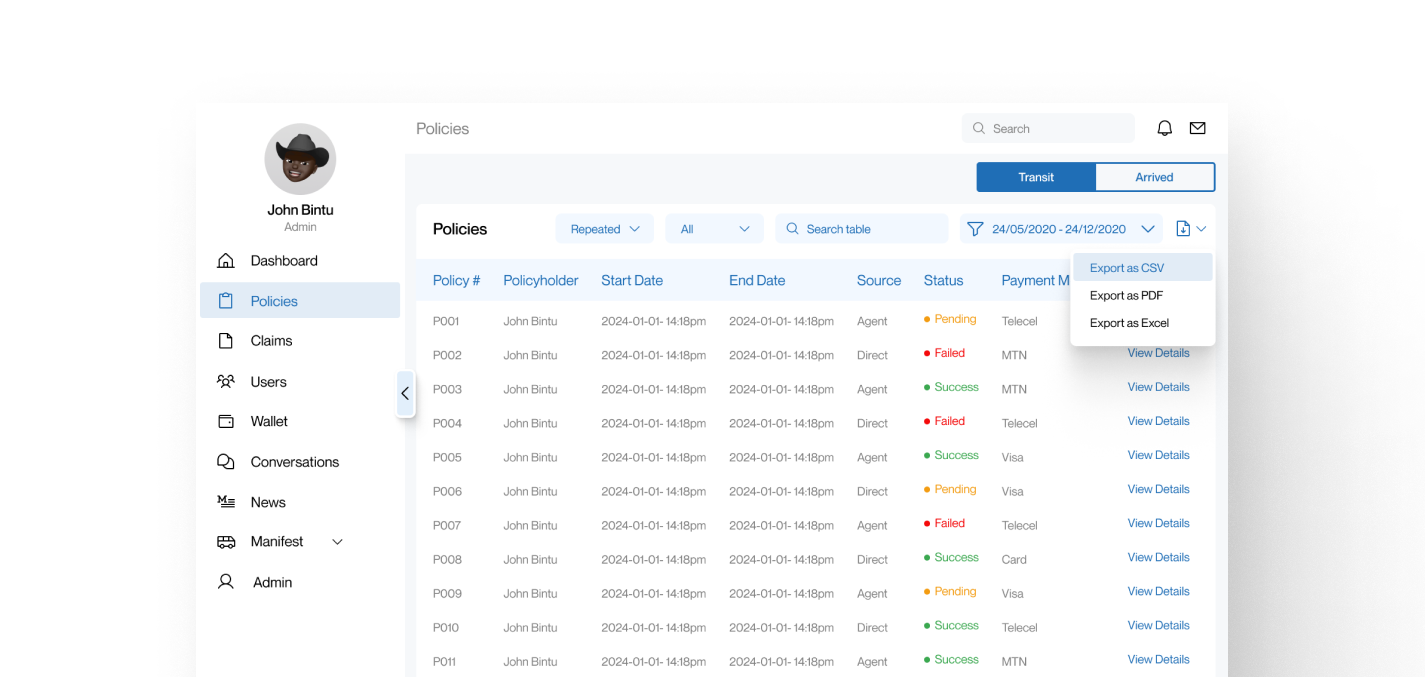
Policies: Tracking policy details, user introduction channels, and policyholder journeys.
3
Claims: Simplified submission and tracking of claims.
4
Users Section: Management of user details, KYC information, and policy history.
5
Wallet: Tracking of premiums, claims payments, and revenue.
6
Conversations: Tracking and managing user interactions via WhatsApp.
7
News: Hub for updates on accidents and relevant events.
8
Manifest: Details of vehicles and passengers with purchased policies.
9
Flagged Vehicles: Tagging and managing vehicles involved in accidents to prevent fraudulent claims.
10
The League: Incentive program for bus drivers to promote policy purchases.
This solution aims to streamline Enterprise Insurance's operations, improve user experience, and effectively serve the informal sector.
Research and Discovery Phase
The Research and Discovery phase was essential for understanding the specific needs and pain points of both Enterprise Insurance and their policyholders from the informal sector. This phase involved gathering detailed insights through user research, analyzing the current system, and studying competitor platforms to inform the design of a comprehensive admin platform that addresses the identified challenges.
Conduct User Research
Objective: To gather detailed requirements and insights from stakeholders at Enterprise Insurance and users from the informal sector, ensuring the platform design meets their specific needs and expectations.
1
Interviews with Enterprise Insurance Stakeholders:
Objective: Understand the operational challenges and requirements from the perspective of those managing and using the current system.
I identified key stakeholders, including claims officers, customer service representatives, and agents.
I developed a structured interview guide with questions focusing on their daily tasks, pain points, and desired improvements.
I conducted one-on-one and group interviews to gather in-depth qualitative insights.
I summarized and analyzed the feedback to identify common themes and specific requirements.
2
Surveys for Policyholders and Potential Users:
Objective: Collect quantitative data on user experiences, challenges, and expectations from a larger audience.
Design a comprehensive survey with questions about the users’ experiences with travel insurance, their interaction with the current system, and their needs and preferences for a new platform.
Distribute the survey through multiple channels such as email, social media, and via insurance agents to ensure wide reach.
Analyze survey responses to identify trends, common issues, and key areas for improvement.
3
Focus Groups with Informal Sector Representatives
Objective: Gain deeper insights into the specific needs and preferences of users from the informal sector.
Recruit a diverse group of participants representing different segments of the informal sector (e.g., small-scale traders, artisans).
Facilitate focus group discussions to explore their experiences with travel insurance, their interaction with current systems, and their expectations for a new platform.
Use these insights to inform the design and functionality of the admin platform, ensuring it is tailored to their needs.
DESIGN PHASE
The Design Phase involves translating research findings into concrete design solutions. This phase ensures that the platform is user-friendly, meets the needs of its users, and addresses the pain points identified during the Research and Discovery phase.
Create Detailed Wireframes
Objective: Develop detailed wireframes for each feature of the platform to ensure all requirements are addressed and provide a clear blueprint for the development phase.
Identify Core Features:
Based on the requirements gathered, I identified the core features that needed wireframes. These included the Dashboard, Policies, Claims, Users Section, Wallet, Conversations, News, Manifest, Flagged Vehicles, The League, and Admin sections.
Low-Fidelity Wireframes:
I began with low-fidelity wireframes to outline the basic structure and layout of each screen. These wireframes focused on the placement of elements without detailed design.
High-Fidelity Wireframes:
Once the low-fidelity wireframes were approved, I developed high-fidelity wireframes that included more detail, such as specific UI elements, icons, and placeholder text.
Review and Feedback:
I conducted review sessions with stakeholders to ensure the wireframes aligned with their expectations and requirements.
Develop Prototypes
Objective: Create interactive prototypes to simulate the user experience and gather initial feedback from users and stakeholders.
Interactive Prototypes:
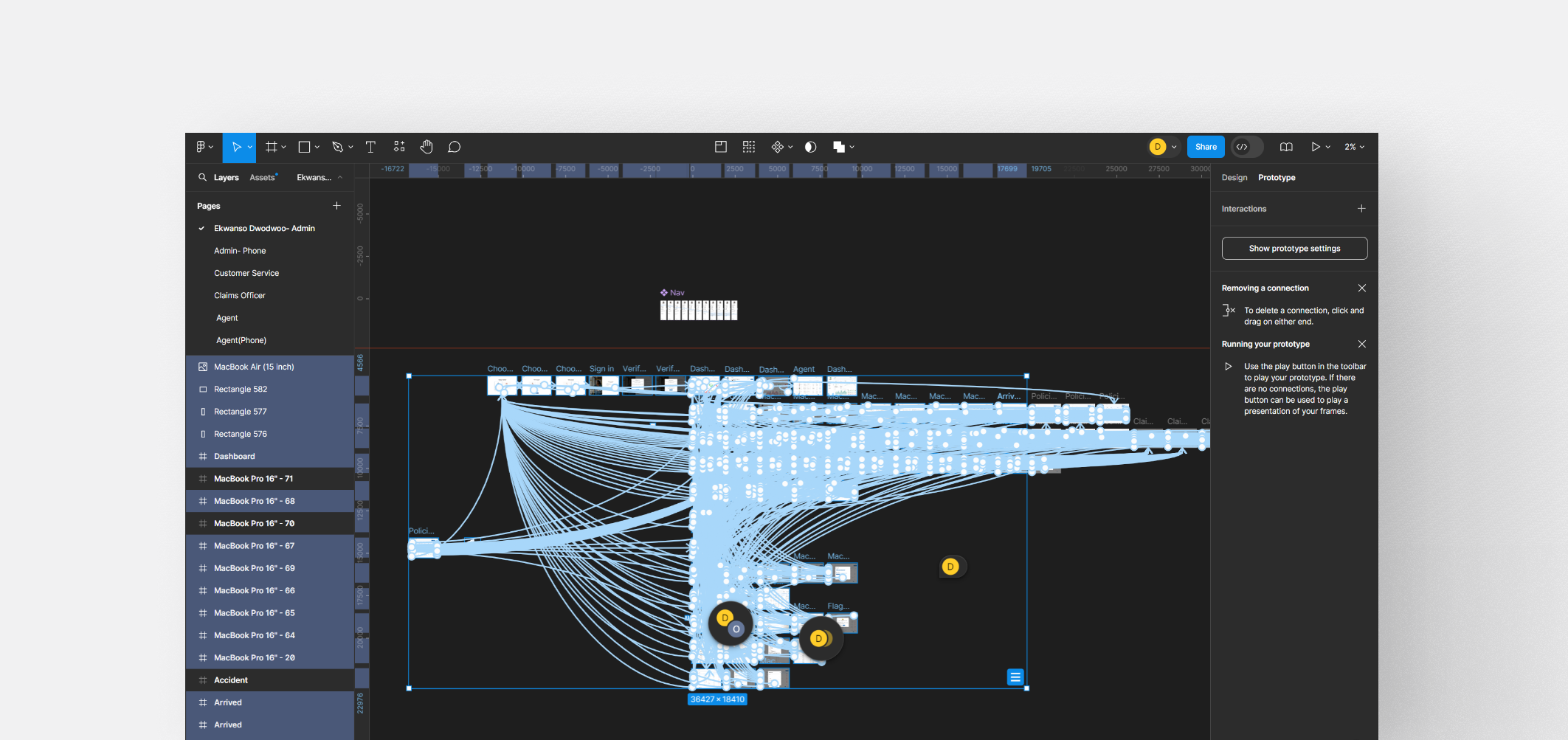
Using the high-fidelity wireframes, I developed interactive prototypes to demonstrate how the platform would function.
Example: For the Policies section, I created prototypes showing how users could view policy details, track policyholder journeys, and access nearest hospitals and fire service locations.
Scenario-Based Prototyping:
Developed prototypes based on specific user scenarios to ensure that all critical user journeys were covered.
Example: For the Claim section, I created prototypes showing how Enterprise Insurance Claims Officer will be able to pay claims to policyholders
Internal Testing
Conducted internal testing sessions with the design and development teams to ensure the prototypes were functional and intuitive.
Conduct Usability Testing
Objective: Test the prototypes with potential users and stakeholders to gather feedback and make necessary adjustments.
Recruit Participants and Prepare Scenarios:
I recruited participants from Enterprise Insurance staff and the informal sector, ensuring diverse representation. Developed specific tasks for participants to complete using the prototypes, such as viewing policy details and submitting claims.
Facilitate Usability Testing Sessions
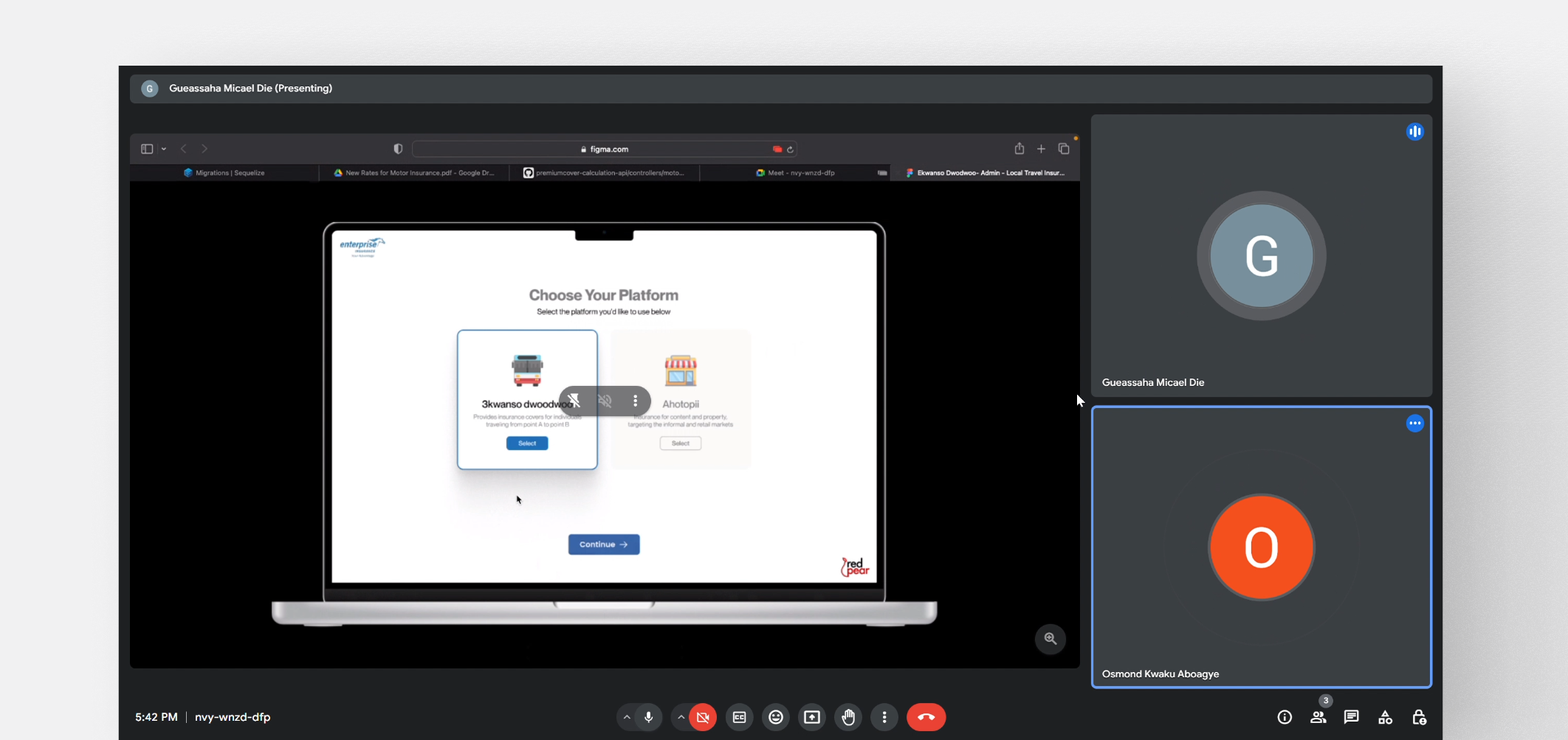
Conducted usability testing sessions, where participants interacted with the prototypes and provided feedback. Utilized tools like Google Meet for remote sessions and UsabilityHub for gathering insights.
Analyze Feedback and Iterate on Designs:
Analyzed feedback to identify pain points and usability issues. Made necessary adjustments to the prototypes to address identified problems, ensuring a more intuitive user experience.
DEVELOPMENT PHASE
After completing the Design Phase, the next step is to move into the Development Phase. This phase involves turning the finalized designs into a functional platform. Here’s a breakdown of the Development Phase:
1
Collaboration with Development Team
Handoff Design Specifications: Provided detailed wireframes, prototypes, and style guides to the development team.
2
Feature Implementation
The Engineers developed each feature of the platform, focusing on user interface and experience.
Frontend Development
Implemented user interface using HTML, CSS, JavaScript, and React.js for responsiveness and interactivity.
Backend Development
The Engineers built a robust backend infrastructure with Node.js, focusing on user management, policy tracking, and claims processing
Integration
They integrated frontend and backend components to ensure seamless functionality.Implement APIs to facilitate communication between different parts of the platform.
RESULTS AND IMPACT
Enhanced User Experience
The platform's intuitive design and mobile accessibility significantly improved user satisfaction and engagement.
Operational Efficiency
Automation of processes reduced manual efforts, particularly in claims processing, leading to faster turnaround times and improved service delivery.
Business Performance
The digital platform contributed to increased sales of travel insurance policies and higher customer retention rates, demonstrating its positive impact on business performance metrics.
Future Opportunities
The scalable nature of the platform opens opportunities for future enhancements, including new insurance products and expanded service offerings.


.webp)